

Turbid Vision Probe
The Turbid Vision Probe is an immersion optical density sensor for real-time, in-situ measurement of total cell density in cell culture, microbial fermentation, and suspended-solids processes. It pairs a wide linear measurement range with an onboard growth model that tracks specific growth rate (µ) live and separates biological signal from process noise.
Technology
A direct, in-situ reading of cell density.
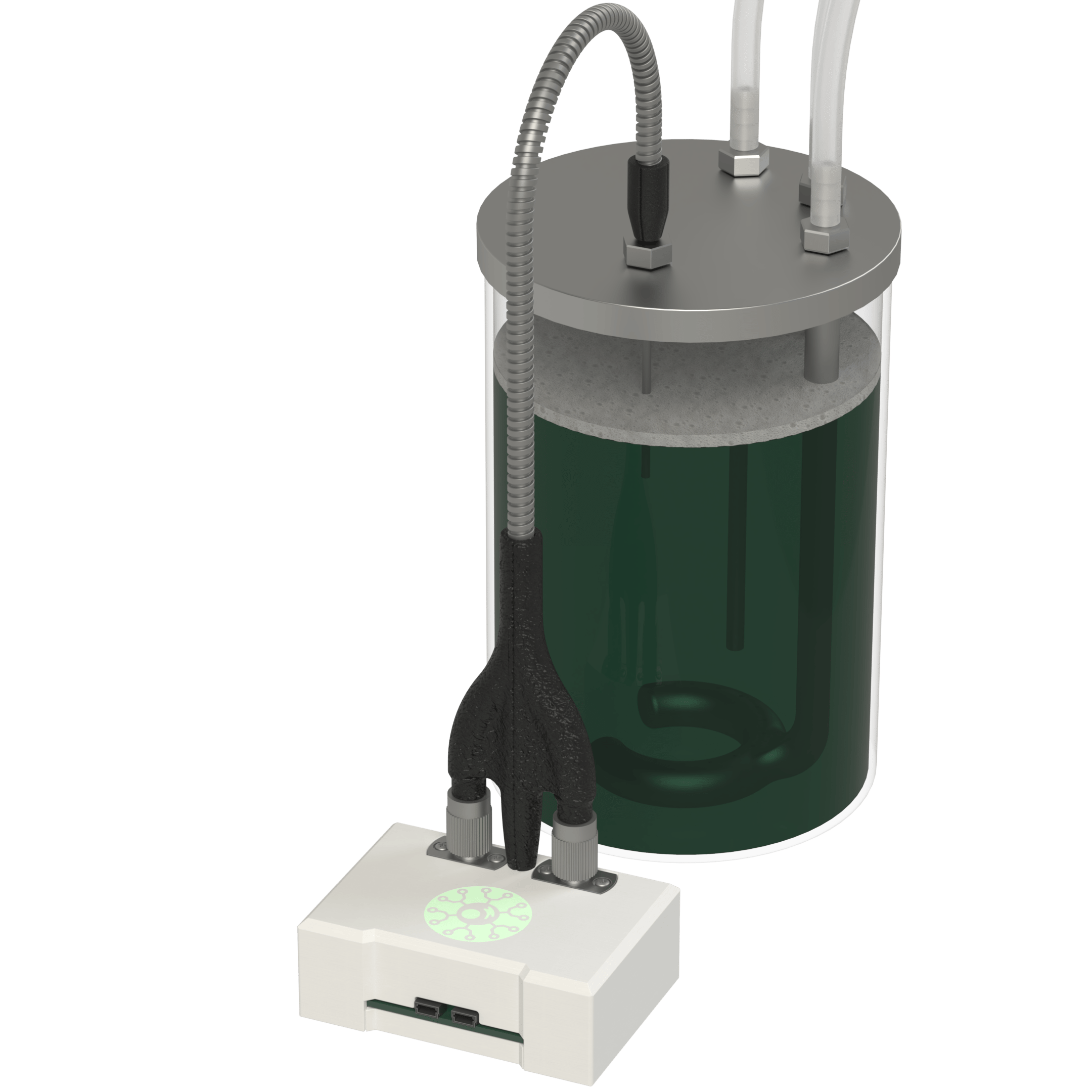
Conventional workflows depend on off-line sampling: pausing the run, drawing then diluting a sample, and reading it on a benchtop instrument. The Turbid Vision Probe measures continuously inside the vessel.
The Turbid Vision Probe works by diffuse reflectance: the probe emits light into the culture and measures the fraction of light the cells scatter back. Backscatter rises with cell concentration, so the signal tracks biomass directly in the vessel.
Measurement uses a tight near-infrared band and rejects interference from ambient light, photobioreactor grow lights, and color changes in the medium.
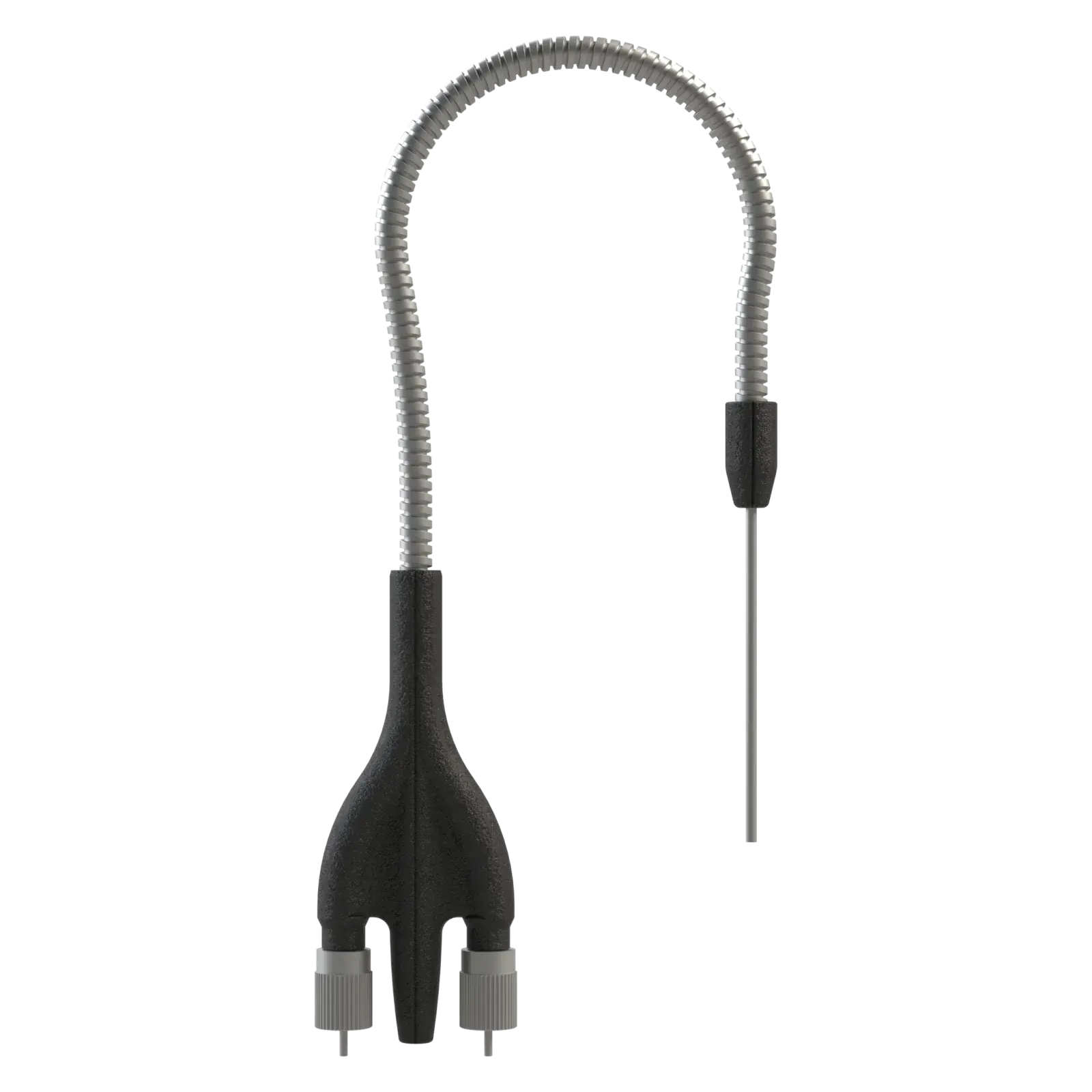
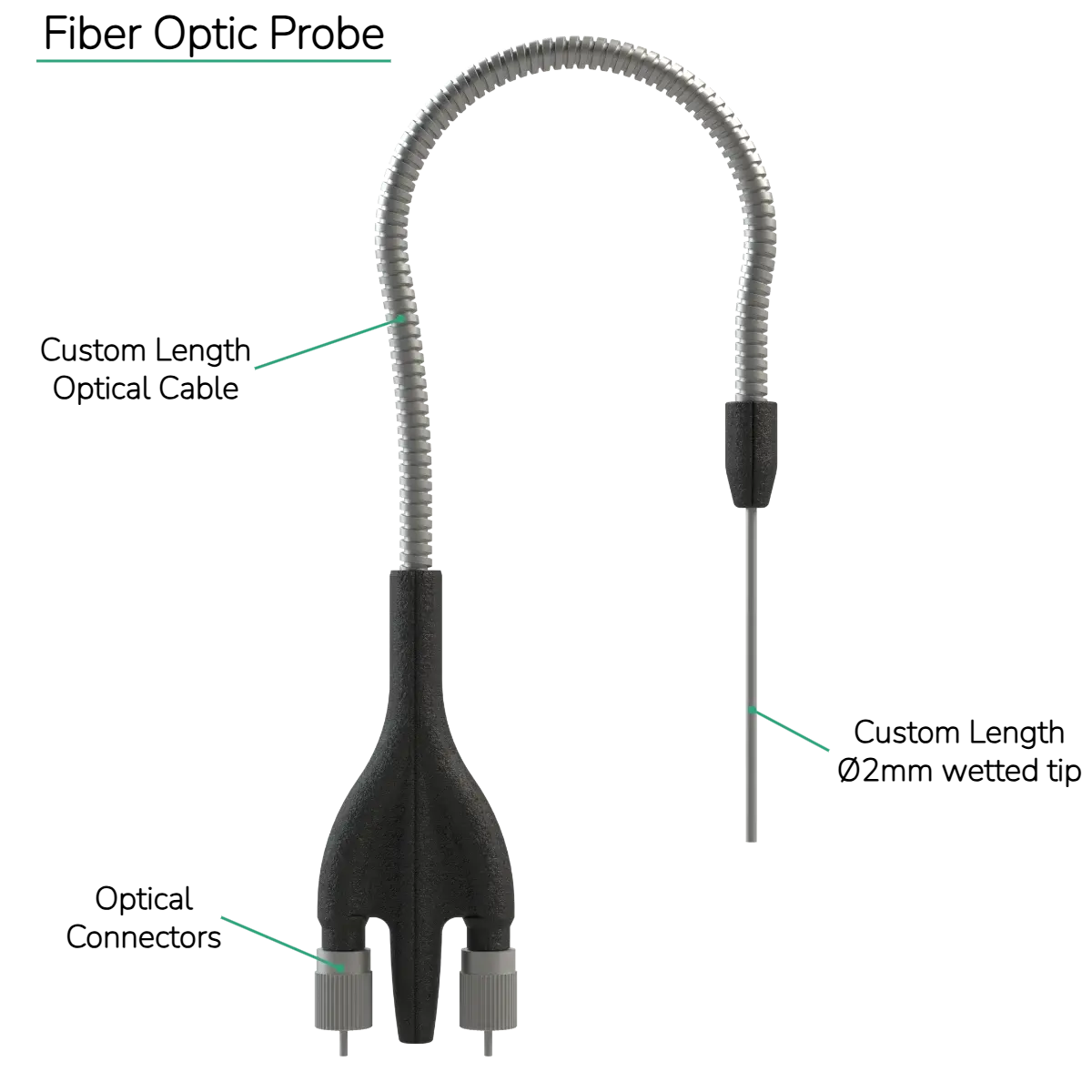
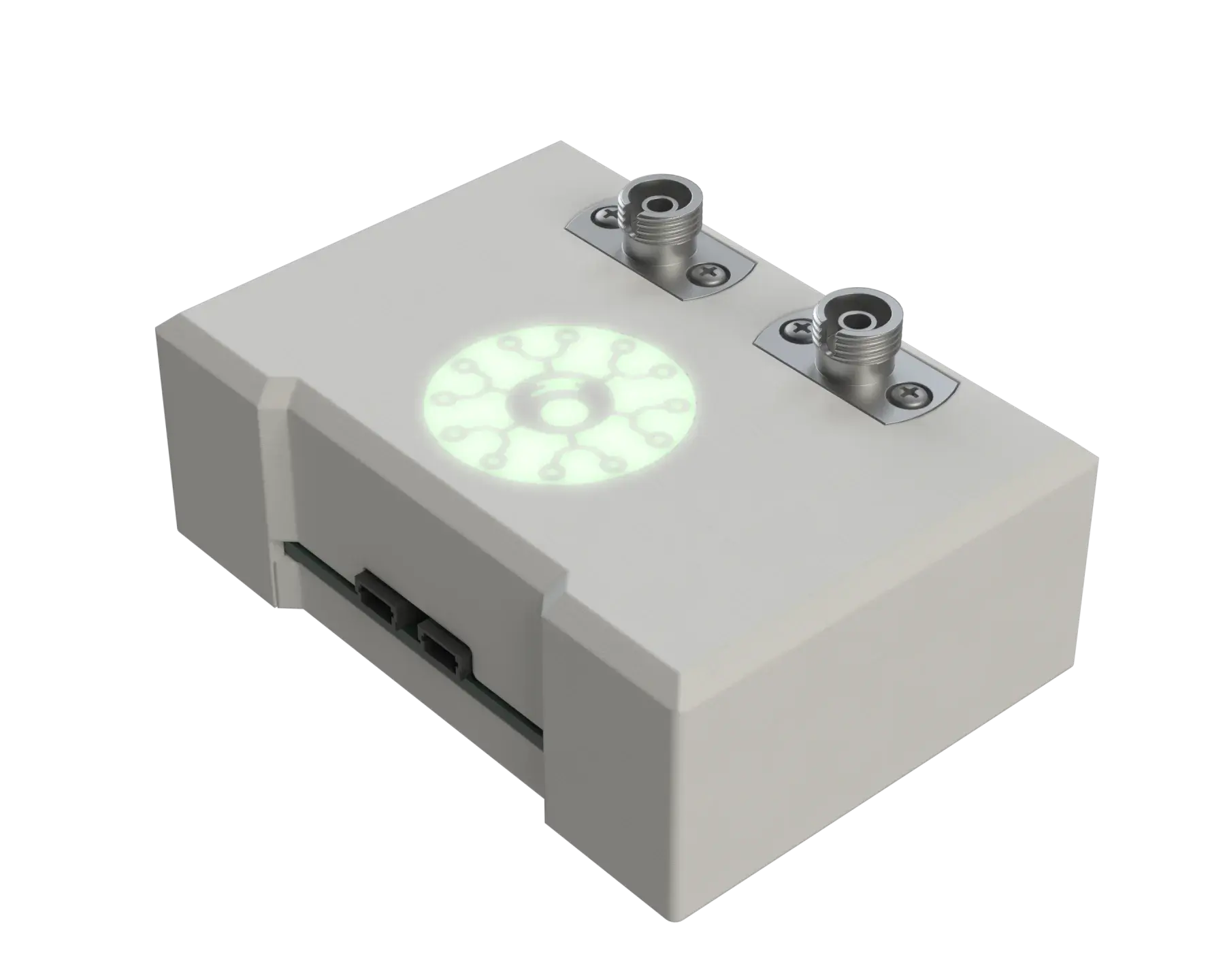
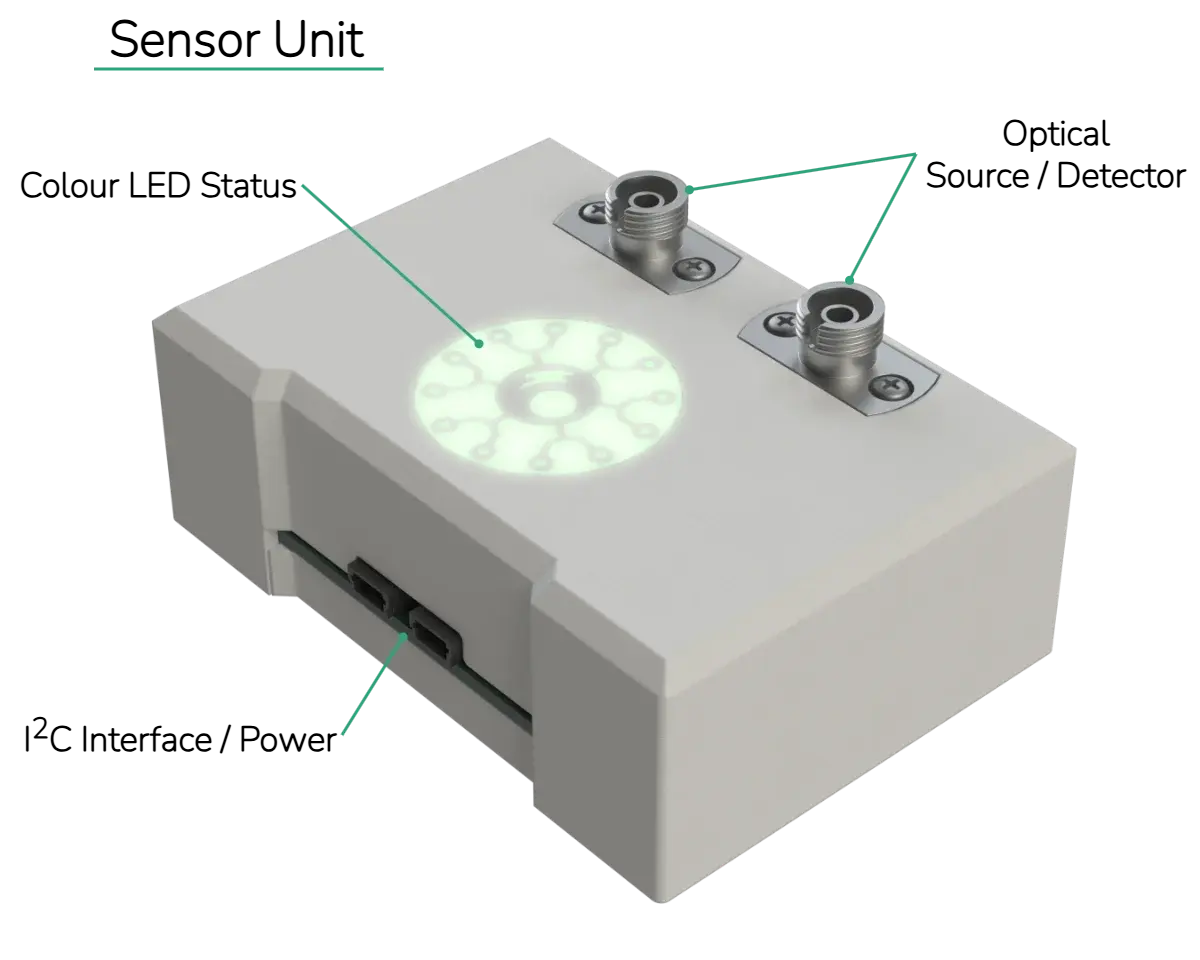
The Turbid Vision Probe comes in two parts. The Sensor Unit houses the electronics, light source, detector, and signal processing. It securely connects to the fiber-optic probe, which carries light to and from your culture. The probe end is the only part that touches your culture.
Features
Built to give you a signal you can trust.
Wide linear measurement range
Stays linear from low-turbidity inoculation to high-density culture, removing the need for serial dilutions required for high density measurements when using a benchtop spectrophotometer.
Adaptive growth rate model
An onboard growth model estimates specific growth rate (µ) continuously using a Kalman filter and rejects process noise. Tuning parameters are modifiable.
Autoclavable probe
Only the fiber-optic probe touches the culture, and it is autoclavable to 130 °C (cycle count under review). It detaches for autoclaving while staying mounted to the vessel, then reconnects to the Sensor Unit from outside the reactor.
Calibrate to your process units
Calibrate against your own standards and report in the units you use: dry cell weight (g/L), OD600, FNU, NTU, or custom.
Integrates across vessel sizes
The same compact immersion probe works from small benchtop vessels to production bioreactors. Its small footprint matters most on small reactors, where headplate space and ports are scarce.
Built for process control
A live, continuous signal can act as the controlled variable in a feedback loop when integrated with your control system, enabling turbidostat or chemostat control, or triggering feeds automatically.
Safe over-the-air updates
The Turbid Vision Probe's firmware will continue to improve. It updates over the air, fail-safe, with no re-flashing or hardware removal.
Interfaces
Integrate over I²C or a built-in web interface.
I²C digital interface
A 3.3 V I²C bus wires straight into an ESP32, Raspberry Pi, Pioreactor, or your own controller, with no proprietary transmitter in between. The register map is fully documented.
WiFi and onboard dashboard
Connects to your WiFi network, or runs as its own WiFi access point. You can then view the dashboard in your web browser to monitor measurements, change system settings, calibrate units, and more.
Limited on-device logging
Create a named run log, choose the recording interval, inspect it in the dashboard, and download the data as CSV. On-device storage is limited, so use I²C or WebSocket for long-term centralized recording and process control.

Specifications
Headline Specs.
| Measured parameter | Total cell density / reflectance / turbidity |
|---|---|
| Measurement principle | Near-infrared diffuse reflectance |
| Measuring range | 0.01–300 g/L dry cell weight (S. cerevisiae); application-dependent |
| Digital interface | I²C and WiFi |
| Mounting / process connection | Immersion, vessel-adapted |
| Construction | Detachable Fiber Optic Probe + external Sensor Unit |
| Sterilization | Autoclavable fiber-optic probe (detachable) to 130 °C; cycle count under review |
| Wetted materials | 316L stainless steel, Silica glass, and Bio-compatible epoxy |
| Calibration | Multi-point in-situ calibration for your process unit |
Monitor your culture in real time.
Get early access for availability and pricing, or contact us about your application.
FAQ